Auto Loan Calculator — See Your Real Monthly Payment

Plug in the numbers before you walk into a dealership. Takes 20 seconds.
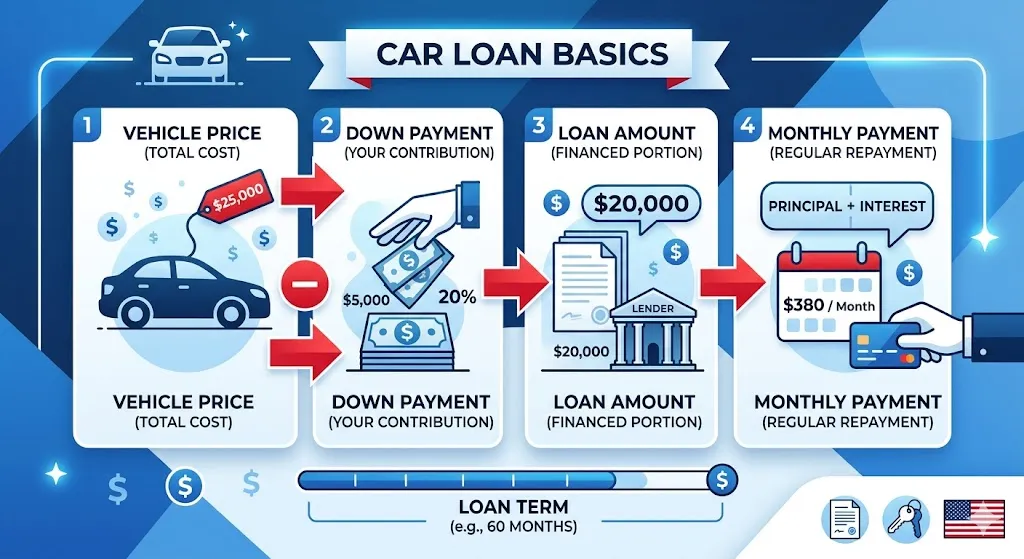
Calculate Your Car Payment

Recommended: 10–20% of vehicle price
Average new car rate: 5%–8% depending on credit score

Latest Mortgage Guides & Tips

How Car Loan Payments Are Calculated in the USA

Understand the basic formula behind your monthly car loan payment
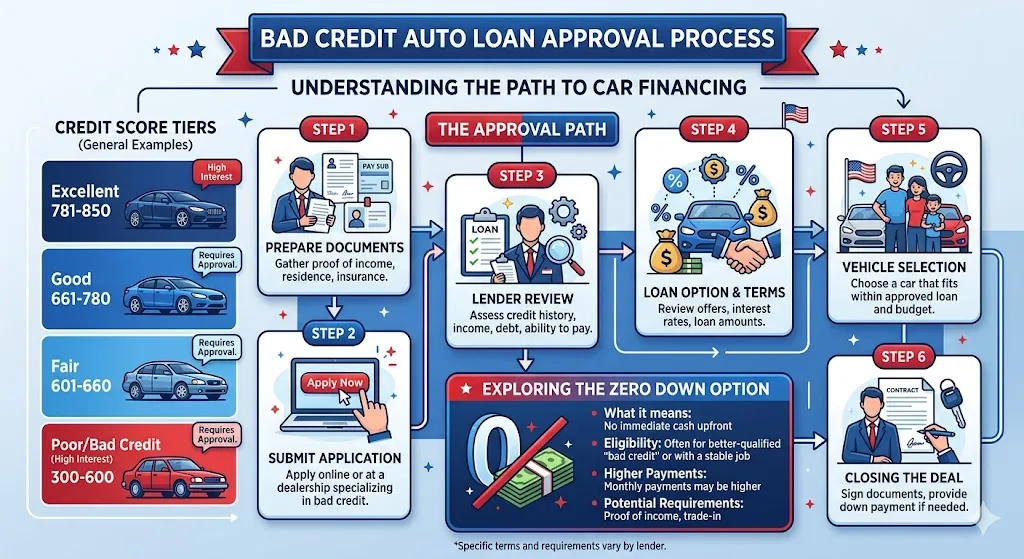
How to Get Approved for an Auto Loan with Bad Credit

Learn the exact steps to secure a car loan even with poor credit
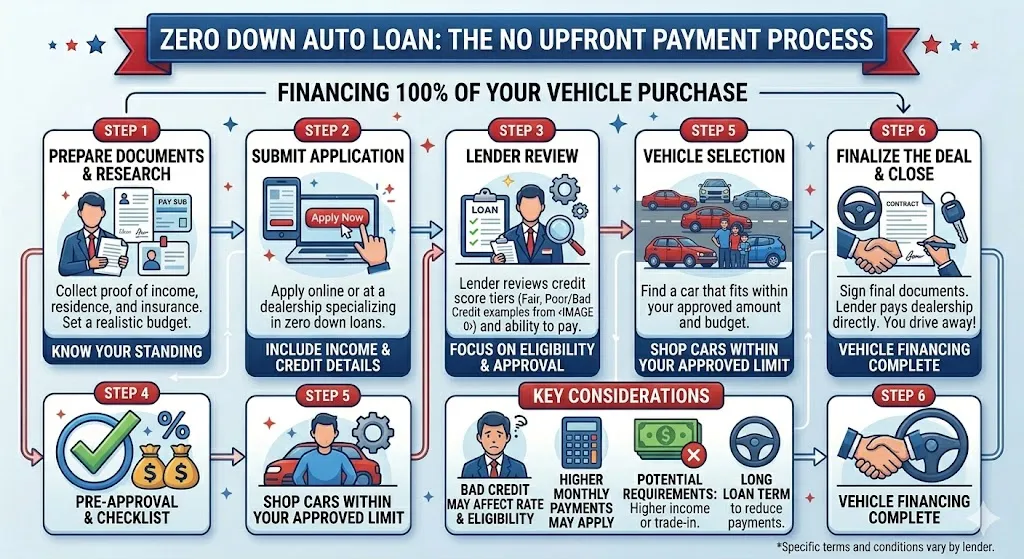
How to Get a Car Loan with No Money Down in the USA

Learn how 100% financing works for car buyers with limited cash

Auto Loan Mastery Guide ebook cover - Smart Car Buying Without Getting Ripped Off

📘 Auto Loan Mastery Guide

Everything you need to know before signing any car loan
20+ Chapters • Instant PDF download

$4.99$24.99
  • ✅ Why financing a car can be smarter than paying cash
  • ✅ How much car can you REALLY afford? (Avoid being house-poor on wheels)
  • ✅ Boost your credit score fast before applying
  • ✅ New vs Used Car Loans – Which one saves you more?
  • ✅ Dealer financing vs Bank/Credit Union – The hidden truth
  • ✅ Fixed vs Variable rates explained simply
  • ✅ Complete step-by-step car buying process + pre-approval checklist
  • ✅ Hidden fees, dealer tricks, negative equity & Gap insurance explained
  • ✅ Leasing vs Buying – Clear comparison with pros & cons
  • ✅ How to negotiate the best deal and refinance later
  • ✅ Plus: First-time buyer checklist, documents needed, and final tips to avoid buyer’s remorse

🔥 Perfect for first-time buyers and experienced drivers who want to save thousands

🛒 Buy Now – Instant Download

🔒 Secure checkout • Lifetime access • 30-day money-back guarantee

Before You Go to the Dealership, Run These Numbers

Most people walk into a car dealership with a vague budget in their head. Dealers know this. The moment you say "I can do around $500 a month," you've handed them control of the deal. This calculator puts the numbers in your hands first.

Use the out-the-door price, not the sticker

The vehicle price field should have the real number — after taxes, destination charges, and dealer fees. The sticker price almost never matches what you actually pay. Ask the dealer for a written out-the-door quote before running any calculations, otherwise your estimate will be off by $1,500 to $3,000.

Your interest rate matters more than most people realize

A 2% difference in APR on a $30,000 loan over 60 months works out to roughly $1,600 extra in interest. That's not nothing. Before accepting the rate a dealership offers, check what your own bank or credit union will give you — it's often noticeably lower. Get pre-approved first, then use that number as leverage at the dealership.

The monthly payment trap If a salesperson says "we can get you into this car for $399 a month" — stop and run the full numbers. $399 × 84 months = $33,516. On a $28,000 car. That's over $5,500 in interest, and you're tied to the loan for 7 years on a car that'll be worth maybe $12,000 by the end. Always look at total cost, not just the monthly number.

Longer loan = lower payment, but you pay for it

The jump from 60 to 72 months on a $32,000 loan at 7% drops your monthly payment by about $60. Sounds appealing. But you pay roughly $900 more in interest and you're still making payments on a 6-year-old car when most people are ready to move on. The 48–60 month range is generally the sweet spot.

How the math works

The calculator uses standard amortization: M = P × [r(1+r)^n] / [(1+r)^n – 1]. P is your loan amount (price minus down payment), r is your monthly rate (annual rate ÷ 12), and n is number of months. Early payments go mostly to interest. Later ones go mostly to principal. The amortization schedule shows exactly how that split changes — useful if you're thinking about making extra principal payments to pay off the loan faster.

Common Questions

It uses standard loan amortization. The formula takes your principal (vehicle price minus down payment), converts your annual rate to a monthly rate, and spreads repayment across the number of months you chose. Each payment covers that month's interest charge first — whatever's left chips away at the balance. In the early months that split is mostly interest. By the last year you're paying mostly principal.
For a new car with decent credit, 5%–7% is typical right now. Used cars are usually 1–3 points higher because lenders consider them riskier. If your credit score is below 650, expect rates in the double digits from most banks — though credit unions tend to be more forgiving. The best move: get pre-approved before stepping onto a lot. It gives you a real number to work with and takes the dealer's financing department out of the equation.
Sometimes. If the lower payment is what makes the car genuinely affordable — and you're not stretching for a car that's too expensive — then 72 months isn't the end of the world. The problem is when people use long terms to justify buying more car than they should. You also risk going "underwater" on the loan, where you owe more than the car is worth. That gets painful if you need to sell or the car gets totaled.
The old rule of 20% down still makes sense, especially for new cars that lose value fast off the lot. But honestly, 10% is fine for most situations. The main goal is to avoid starting the loan underwater. If you're trading in a car, make sure the dealer applies the full trade-in value — it counts as your down payment and can make a real difference on the loan amount.
Yes — for accuracy, use the full out-the-door price. Taxes, title, registration, and dealer fees all add up and are usually rolled into the loan. If you only enter the sticker price, your payment estimate will be lower than reality. Ask the dealer for the out-the-door figure in writing before you start negotiating.